- Baixe o App
-
Vagas de Voluntariado
Destinos mais procurados
Veja todas as vagas de voluntariadoDiferentes experiências de viagem
- Academy
- Blog da Comunidade
- WP Life
- Descontos exclusivos
- Como funciona
- Ajuda
- Sair
- Entrar
- Registre-se
- Seja um anfitrião
- Português

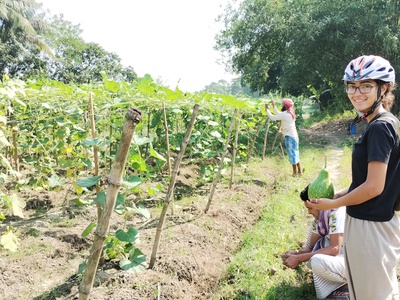
Companion Plantation Research
A experiência
We need to identify which plants support each other to grow and keep the pest away. We need to documents those and create very easy to understand content.
Which we can put in our garden and surrounding ,rooms so that everyone can learn about it. Also we need to do research all Ancient, traditional, tribal, modern and advanced biohacking technologies to keep the pest away and get maximum organic food production so that we don't need any chemical
Como você ajuda
25 horas por semana
Escrever conteúdos: Crie, edite e produza conteúdos inspiradores.
O que você ganha
2 dias livres por semana
Quarto privado: Você terá uma cama em um quarto privado, ou seja, um quarto só para você
Quarto compartilhado: Você terá uma cama em um quarto compartilhado, ou seja, irá dividir o quarto com outras pessoas.
Quarto da equipe: Você terá uma cama em um quarto compartilhado, ou seja, irá dividir o quarto com outras pessoas.
Camping: Uma barraca confortável para dormir sob um céu estrelado.
Café da manhã: Você ganha café da manhã gratuito todos os dias que ficar aqui.
Almoço: Você ganha almoço gratuito todos os dias que ficar aqui.
Jantar: Você ganha jantar gratuito todos os dias que ficar aqui.
Descontos em tours: Ganhe descontos em tours ou passeios pela cidade.
Descontos em hospedagem: Ganhe descontos para hospedar-se em outros hostels.
Lavanderia gratuita: Você pode usar nossa lavanderia gratuitamente.
Passeios de graça: Te levamos para fazer tours e passeios pela cidade. De graça!
Trilhas de graça: Te levamos para fazer excursões e trilhas pela cidade. De graça!
Festas de graça: Ganhe entrada gratuita para as melhores festas da cidade.
Eventos de graça: Ganhe entrada gratuita para os melhores eventos da cidade.
Bicicletas à vontade: Use nossas bikes à vontade, quando quiser.
Aulas de Yoga: Participe gratuitamente das aulas de yoga no nosso espaço.
Aulas de idiomas: Participe gratuitamente das aulas de idioma no nosso espaço.
Terapias holísticas: Participe gratuitamente de atividades terapêuticas no nosso espaço.
Curso de Permacultura: Participe gratuitamente do nosso curso de permacultura.
Use nossa cozinha equipada: Fique à vontade para usar nossa cozinha para cozinhar sua própria comida.
Certificado: Ganhe um certificado de conclusão quando for embora.
Internet de Alta Velocidade: Internet de alta velocidade para você trabalhar remotamente
Requisitos
Recebe voluntários sozinhos, casais e duplas de voluntários
O que não está incluso
Passagens, seguro viagem, transporte e visto
Detalhes
🌱 Companion Plantation Research Volunteer Program
Using Nature to Protect Nature — Zero-Chemical Farming at Lieberearth
Program Description
The Companion Plantation Research Program invites volunteers to explore the ancient wisdom of natural farming and modern permaculture. The goal is to understand how certain plants can naturally protect, nourish, and support the growth of other plants — eliminating the need for synthetic fertilizers, pesticides, and harmful chemicals that damage soil, water bodies, and biodiversity.
Volunteers work closely with the Lieberearth Permaculture Team to document effective plant-to-plant relationships and create easy-to-understand knowledge materials that farmers, gardeners, and communities can use to adopt chemical-free, regenerative agriculture.
This project supports SDG 2 (Zero Hunger), SDG 6 (Clean Water), SDG 13 (Climate Action), and SDG 15 (Life on Land)
🌿 Volunteer Responsibilities
1. Companion Plant Research
Volunteers will:
Identify beneficial plant pairs and plant groups (guilds).
Research how natural plant combinations prevent pests, enhance soil nutrients, improve flavor, and increase yield.
Study the science behind allelopathy, root exudates, shade patterns, and scent masking.
Observe how these plant combinations behave in real farm conditions.
2. Field Experiments
Volunteers will:
Prepare small research plots in our permaculture garden.
Plant selected companion pairs and monitor outcomes.
Record observations: pest reduction, growth rate, soil moisture, pollinator activity, etc.
Compare natural plant defense vs. areas without companion support.
3. Documentation & Content Creation
Volunteers will help create:
Companion planting charts
Pest-prevention plant lists
Soil-enriching plant guides
Step-by-ste
Atividades & Turnos
Outcome
By the end of the program, volunteers will help produce a fully researched, practical, chemical-free farming guide that farmers across India can use to protect soil, water, and biodiversity — while achieving healthy harvests.
Regras
4. Community-Ready Knowledge Packs
Volunteers compile their findings into:
A “Zero-Chemical Farming Handbook”
Educational material for farmers, schools, and communities
Visual guides for use in training programs
🌾 Examples of Companion Planting (for Volunteer Research)
🌼 1. Marigold + Vegetables (Natural Pest Repellent)
Marigold roots release thiophenes that repel nematodes & insects.
Plant around brinjal, tomato, potato, beans.
Volunteer task:
Document which vegetable varieties respond best; measure pest reduction.
🧄 2. Garlic + Roses / Fruit Trees (Fungal Protection)
Garlic’s strong sulphur compounds repel aphids & fungal growth.
Works well under guava, mango, and in rose gardens.
Volunteer task:
Observe leaf health and fungal reduction vs. control areas.
🌱 3. Basil + Tomato (Flavor & Growth Booster)
Basil repels whiteflies & enhances tomato flavor.
Reduces caterpillars and improves pollination.
Volunteer task:
Record taste, yield, aroma, and pest presence.
🌽 4. The Three Sisters Guild (Corn + Beans + Pumpkin)
Corn gives support for beans to climb.
Beans fix nitrogen for all.
Pumpkin shades the soil, reducing weeds & moisture loss.
🪴 5. Lemongrass + Kitchen Garden Plants (Mosquito & Insect Barrier)
Lemongrass contains citronella, repelling mosquitoes & insects.
Works as a natural barrier planting.
Volunteer task:
Design border-planting patterns for farmers.
---
☘️ 6. Neem + Any Garden Area (Overall Protection)
Neem leaves act as bio-pesticide when decomposed.
Neem shade suppresses harmful weeds.
Volunteer task:
Create a farmer-friendly guide on neem mulch applications.
🌍 Skills Volunteers Will Gain
Practical knowledge of permaculture
Natural pest management
Soil health improvement techniques
Research and documentati